 Synapse Labs
The Oscar Experiment
The first cat that can speak.
We built a neural interface to find out what a cat really wants. We offered him food, water and a toy. He asked for something else.
Support the research →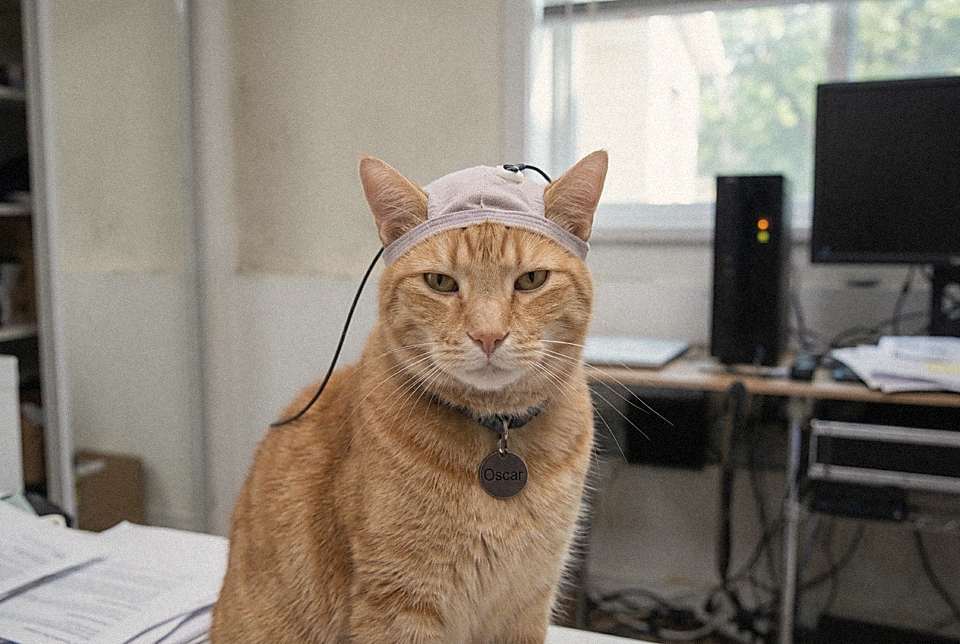
Meet Oscar.
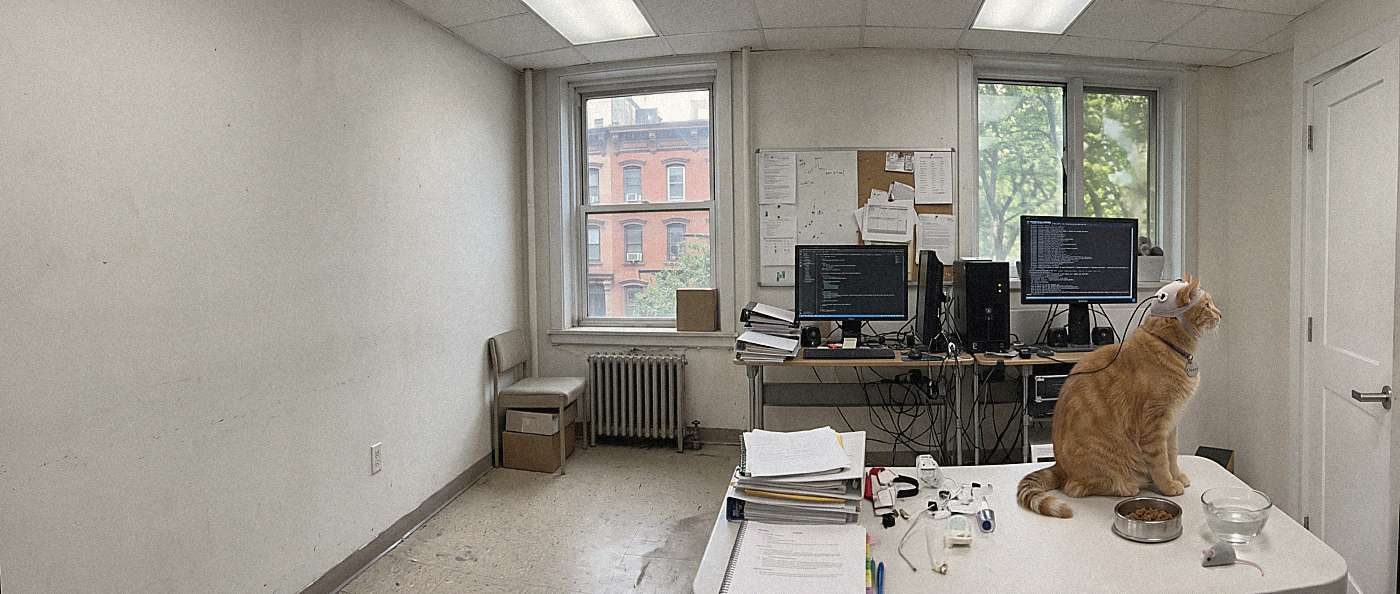
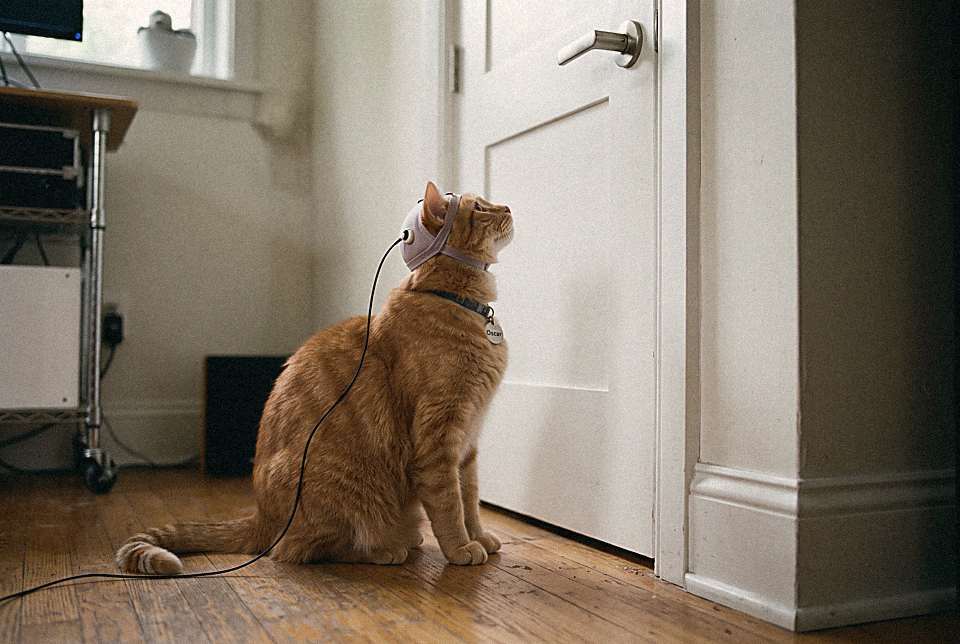
Oscar is a domestic orange tabby and the first participant of the Oscar Experiment. A soft cap records patterns of electrical activity linked to what he does every day: eating, drinking, playing, going outside. An AI model learns which pattern goes with which need, and turns it into a short line of text.
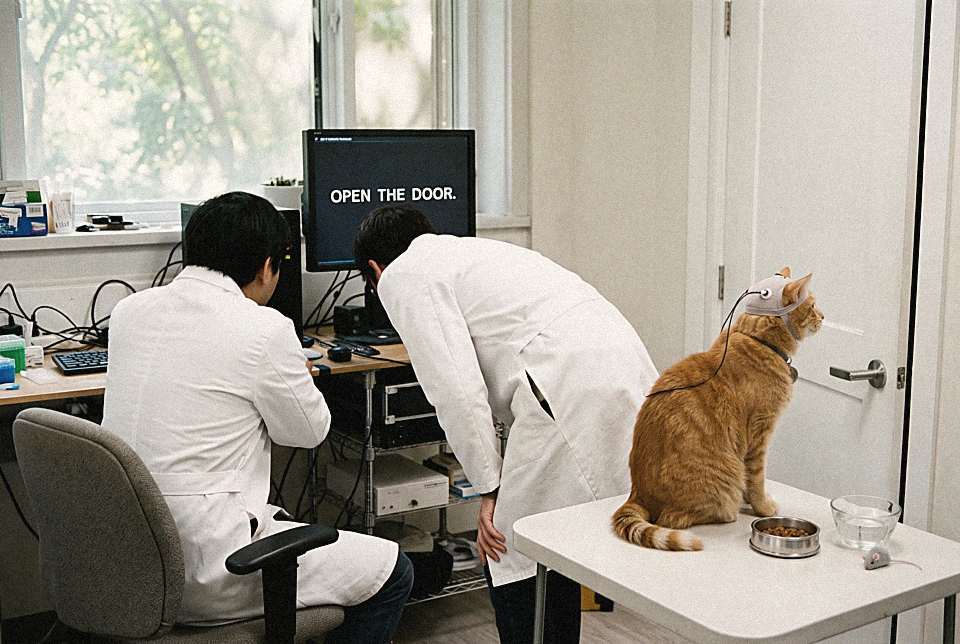
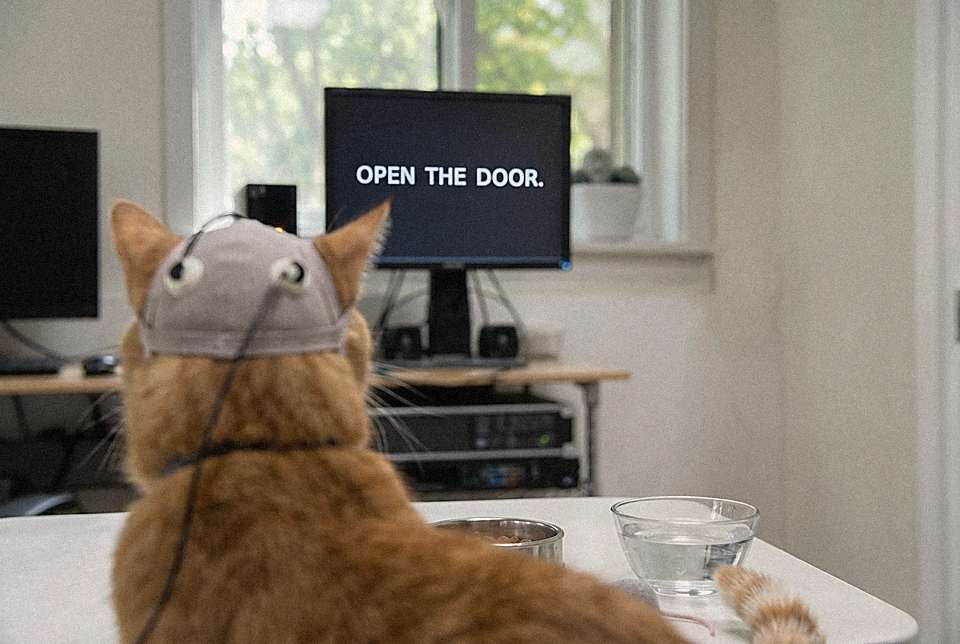
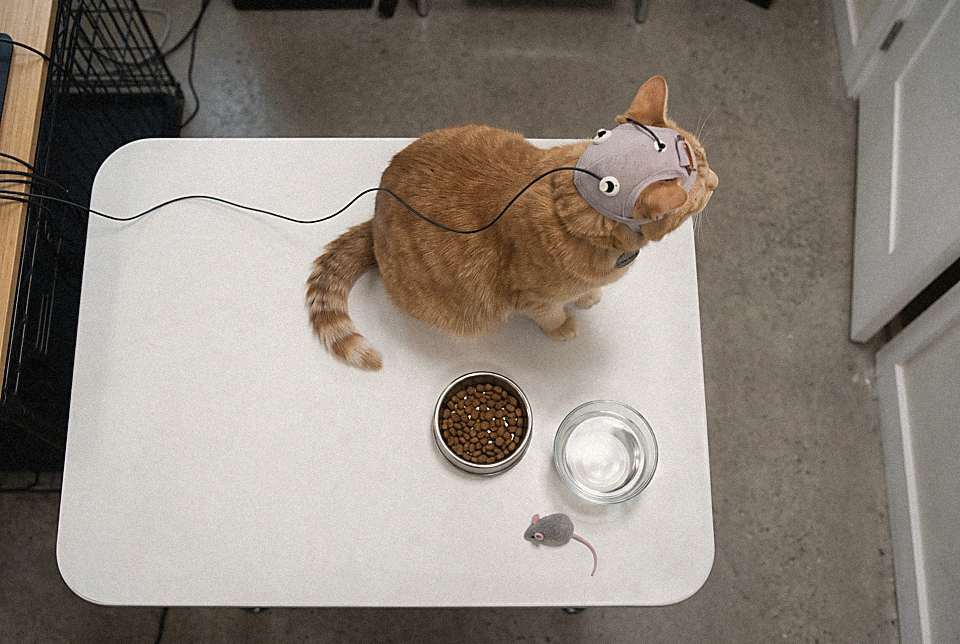
Then came the test. Food. Water. A toy. The system was expected to pick one. The display showed a message nobody anticipated.
“OPEN THE DOOR.”
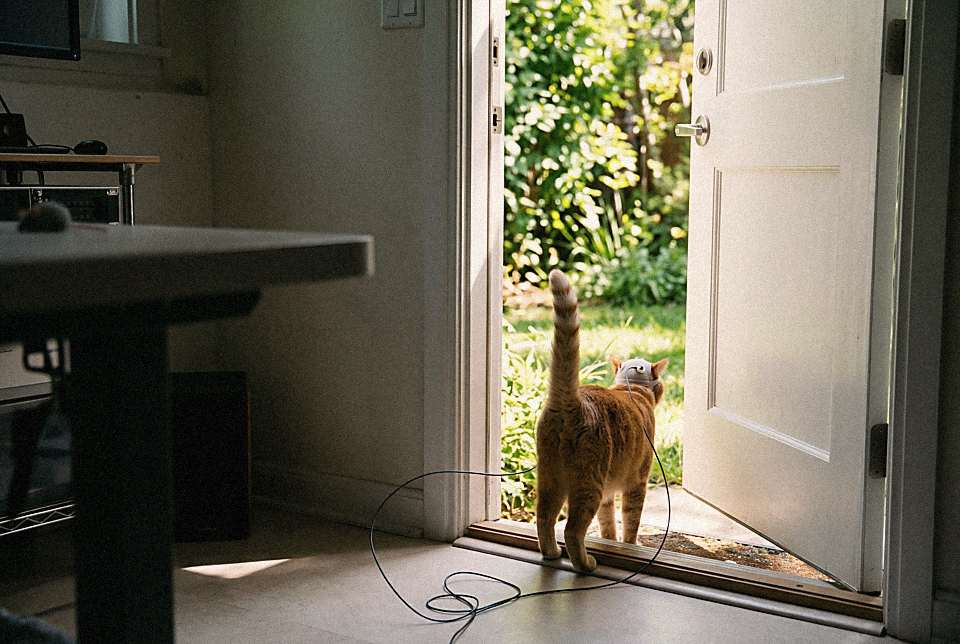
He didn't want food. He didn't want water. He definitely didn't want the toy. He wanted to go outside.
- Name
- Oscar
- Species
- Domestic cat, orange tabby
- Trained intentions
- Eating, drinking, playing, going outside
- First message
- Open the door.
Inside the lab.
The technology doesn't read sentences from a cat's mind. It interprets learned neural patterns and converts them into simple messages a person can read. If it ever became reliable, vets could assess discomfort earlier, researchers could study how other species process information, and shelters could better understand stress.
But the biggest question is simpler: what have animals been trying to tell us all this time?